
Home › Guides › How to shut off the water after a burst pipe: main valve, meter, water heater, fixtures and the breaker
How to shut off the water after a burst pipe: main valve, meter, water heater, fixtures and the breaker
A burst pipe puts out several gallons a minute. The first job is to stop it, and the second is to stay away from water that is touching electricity. This page shows where the valves are and the order to try them. It is about the plumbing, not the claim; once the water is off, the water damage claim guide covers what to photograph and who to call.
The order to try
- Fixture valve first if the leak is at one fixture. A toilet, a sink or a washing machine has its own small valve within arm's reach. Closing it stops that one leak and leaves the rest of the house with water.
- Main valve if the leak is in a wall, ceiling or floor. Water coming from somewhere you cannot see means a supply line inside the structure. Only the main valve stops it.
- Meter at the curb if the main valve will not turn. An old gate valve can be seized. The utility's shutoff in the meter box takes a meter key or a wrench and a bit of force.
- Water heater if the tank itself is leaking. Close the cold inlet on top of the tank and cut the power or gas to the heater so it does not run dry.
- Breakers for the wet rooms, only from a dry spot. If you can stand on a dry floor with dry hands and the panel itself is dry, switch off the breakers for the rooms that are wet. If any of that is not true, leave it to the power company.
The main shutoff valve
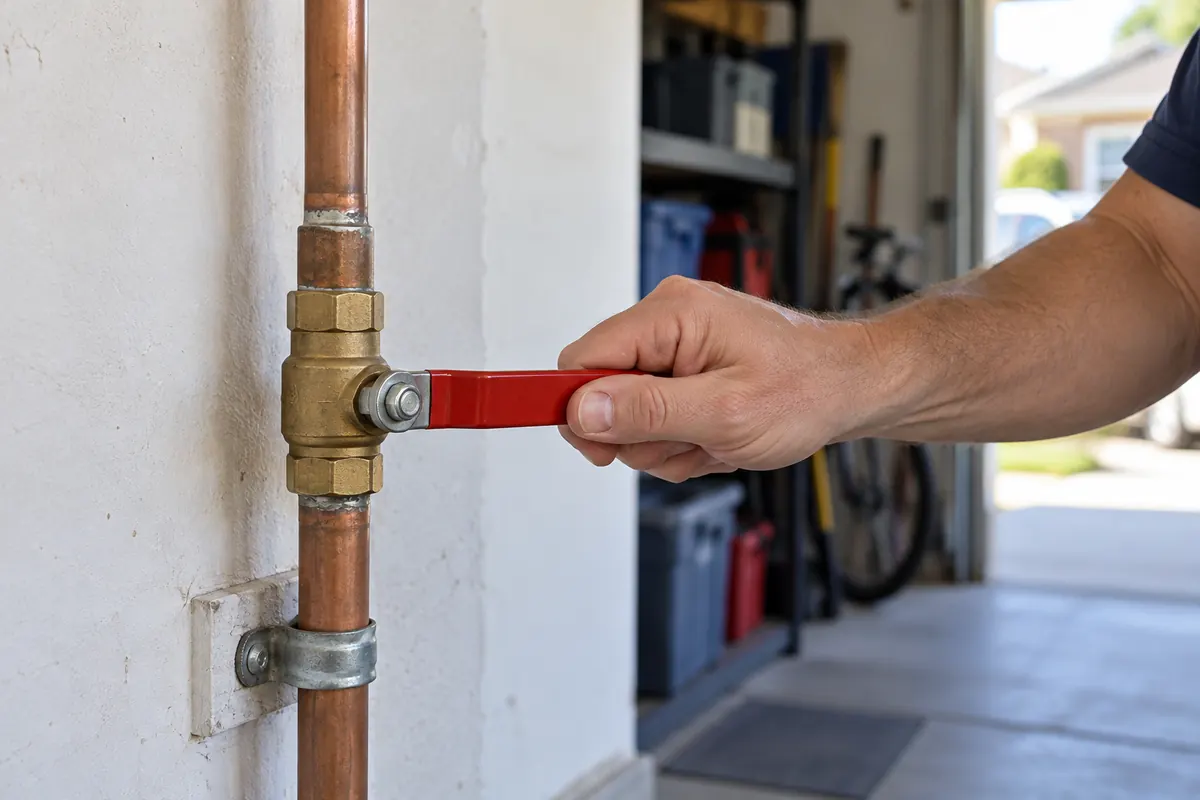
The main valve is where the supply line enters the house. In a cold climate that is usually the basement or a utility room on the street side; in a warm climate it is often the garage, a crawlspace, or an outside wall near the hose bib. It is almost always within a few feet of the water heater or the pressure regulator, and it is usually the first valve on the pipe after it comes through the wall or floor.
- Ball valve (lever handle): turn it a quarter turn so the lever sits across the pipe instead of along it. Closed is crosswise.
- Gate valve (round wheel): turn it clockwise until it stops. It can take several turns. Do not force a wheel that is stuck; go to the meter instead.
- After closing it, open a tap on the lowest floor to drain the pressure. The leak will slow and then stop as the pipes empty.
If you have never found yours, find it now, on a day when nothing is wrong, and tag it. Most people learn where it is while standing in water.
The meter at the curb
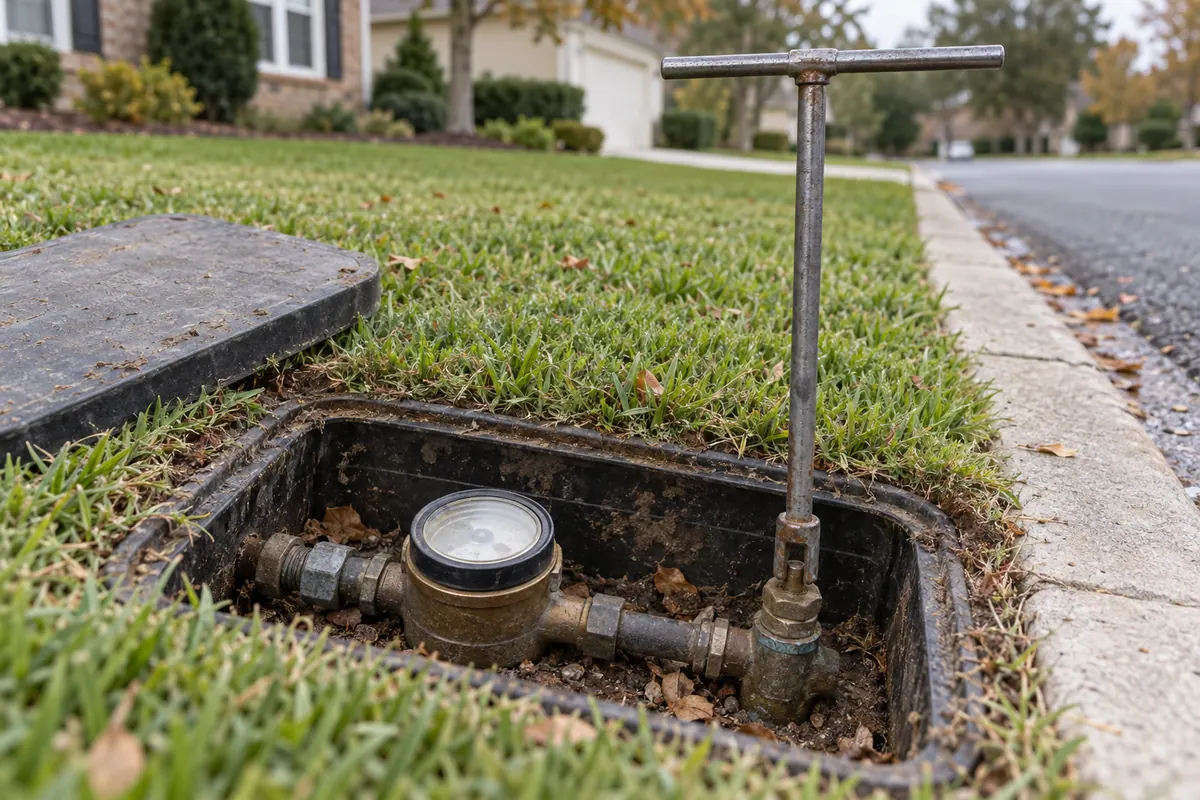
The water utility's shutoff sits in a box in the ground near the street or the sidewalk, usually in line with the front of the house. Lift the lid with a screwdriver. Inside is the meter and, on the street side of it, a valve with a small tab or a nut. A meter key, sold at any hardware store for a few dollars, turns it; a long adjustable wrench on the tab works in a pinch. A quarter turn clockwise closes most of them; the tab lines up crosswise to the pipe when it is shut.
Some utilities ask that you call them rather than turn the curb stop yourself, and a few seal the valve. If it will not move, call the utility's emergency number. They will send someone, often within the hour for an active leak.
The water heater
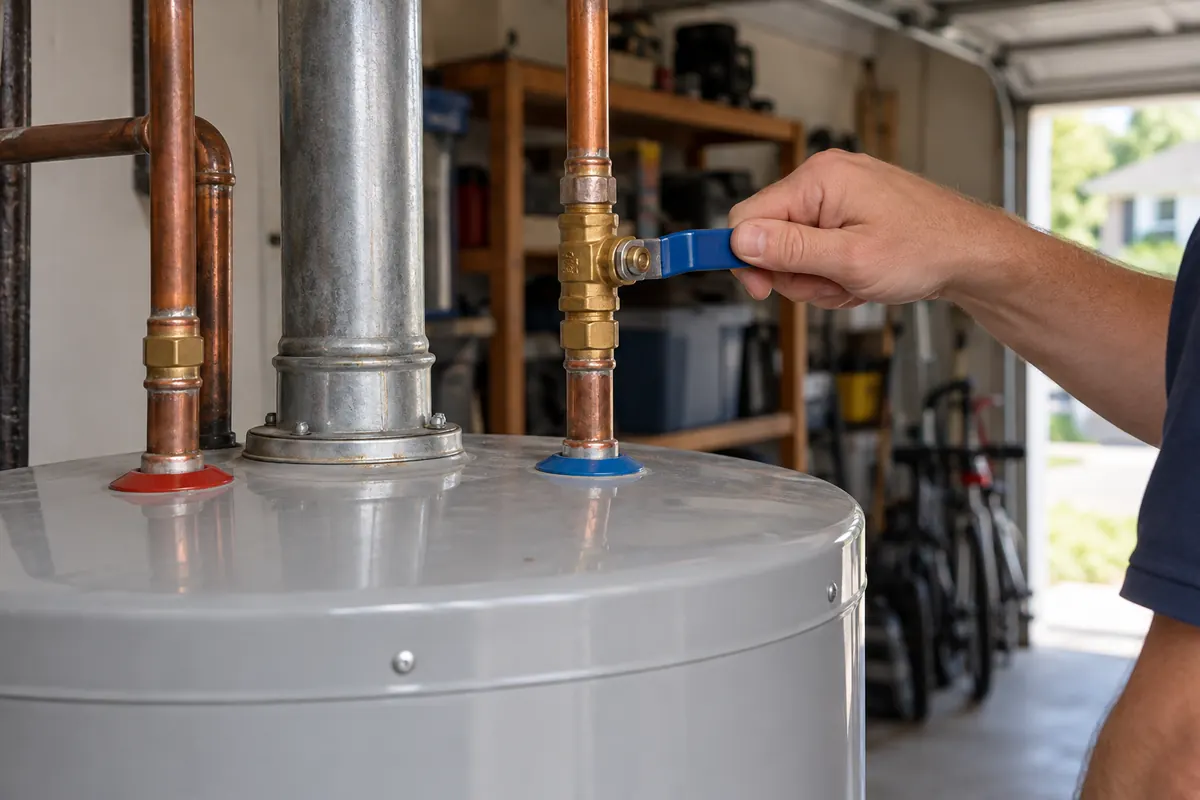
A leaking tank does two things: it empties onto the floor, and it keeps refilling from the cold inlet as long as that valve is open. Close the valve on the cold pipe entering the top of the tank (blue handle or the pipe without a hot-water label). Then stop the heater itself: switch off its breaker if it is electric, or turn the gas control knob to OFF and close the gas valve on the supply pipe if it is gas. A heater running on an empty tank can be damaged, and an electric element can burn out in minutes.
The temperature-and-pressure relief valve on the side of the tank, with the short pipe pointing at the floor, is meant to drip under certain conditions. A steady stream from it is also a reason to shut the heater down and call a plumber.
Fixture valves: sink, toilet, washer
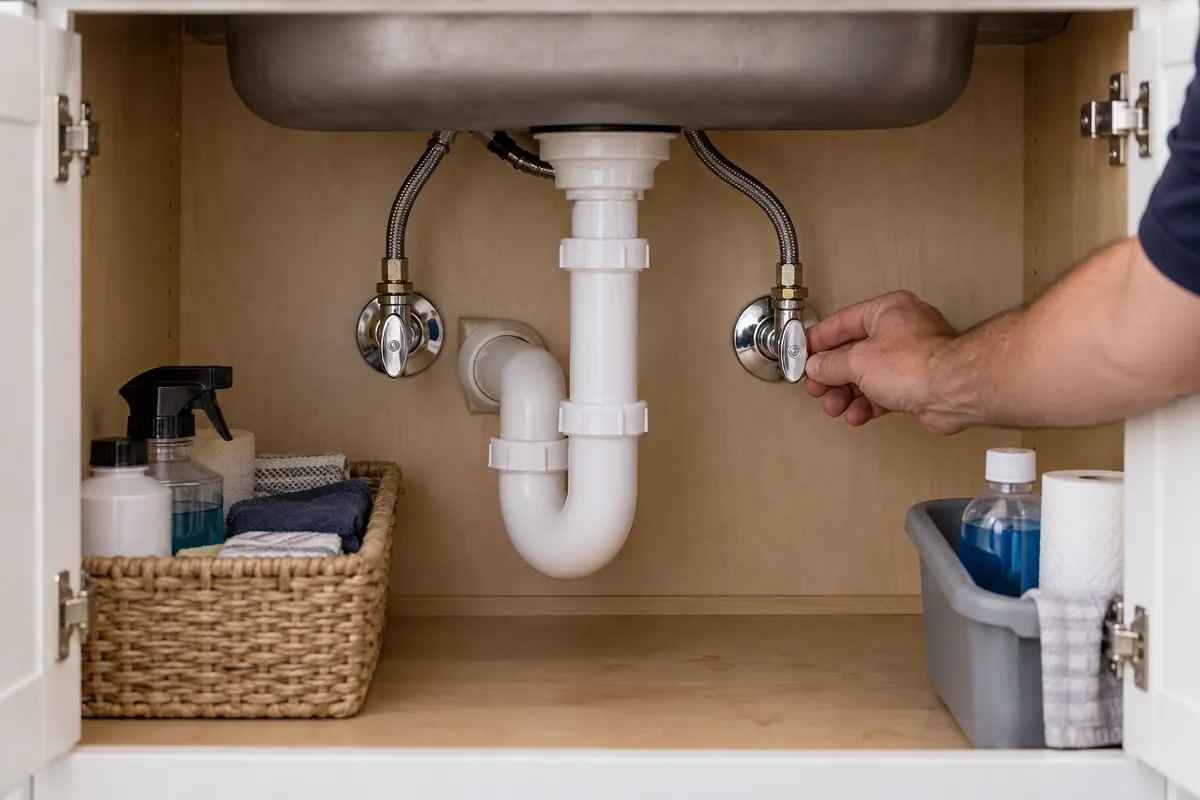
Sinks. Open the cabinet. On the wall or the floor are two small valves with flexible lines running up to the faucet. Turn each clockwise until it stops. If the leak is from the drain rather than the supply, closing the valves will not help; stop using the sink and put a bucket under the trap instead.
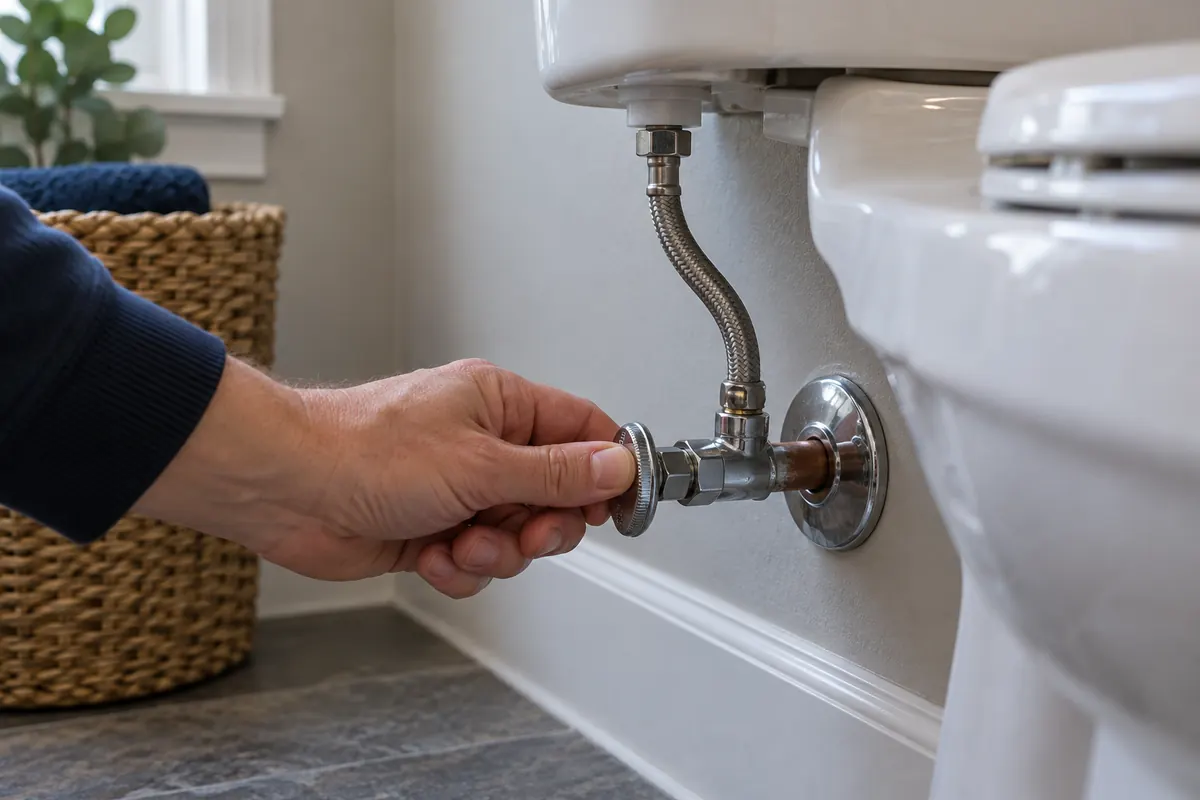
Toilets. The valve is on the wall behind or beside the bowl, near the floor, with a flexible line up to the tank. Clockwise to close. If the toilet is overflowing, lift the tank lid and push the flapper down to stop the fill, then close the valve.
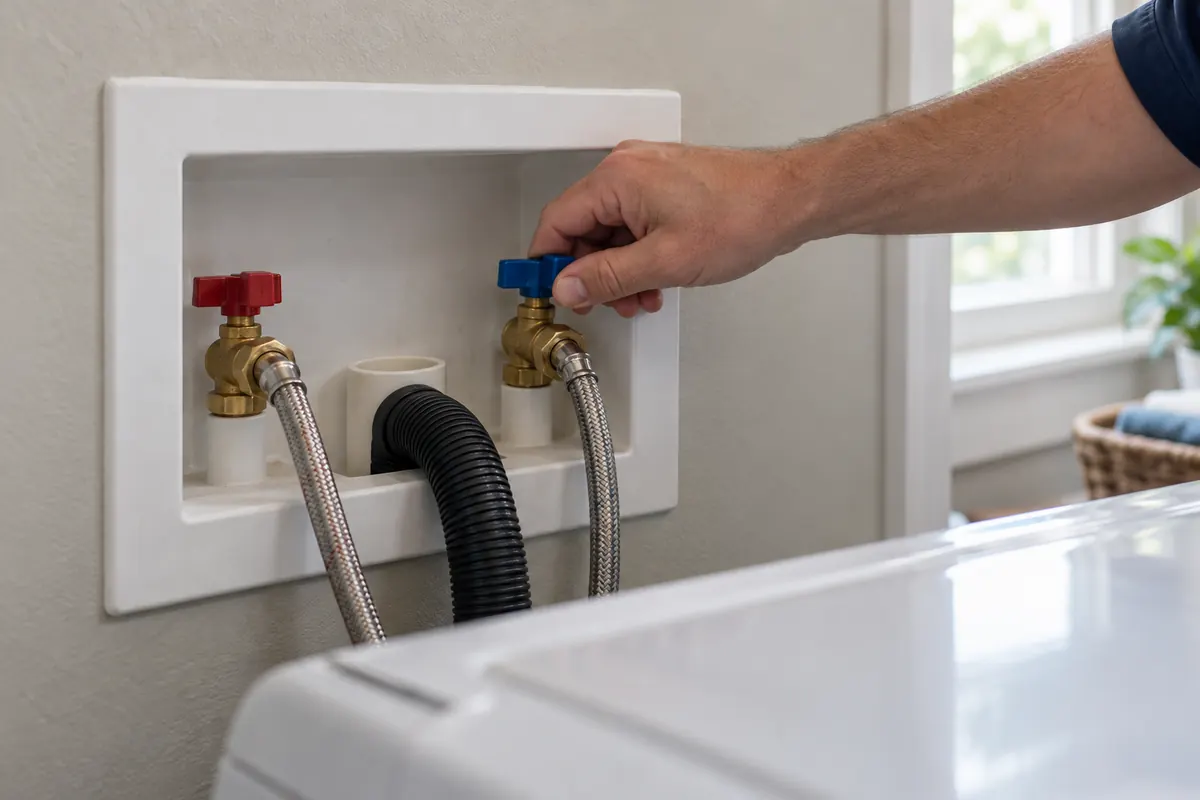
Washing machines. Behind the machine, usually in a recessed box in the wall, are two valves, hot and cold, with the drain hose between them. Turn both clockwise, or push the single lever down if it is a lever box. Washer supply hoses are among the most common sources of a flooded laundry room; closing these valves whenever you travel is cheap insurance against the next one.
A fixture valve that has not moved in years may not seal completely or may begin to drip at its stem once turned. If the leak does not stop within a minute, close the main instead and tell the plumber.
The breaker panel
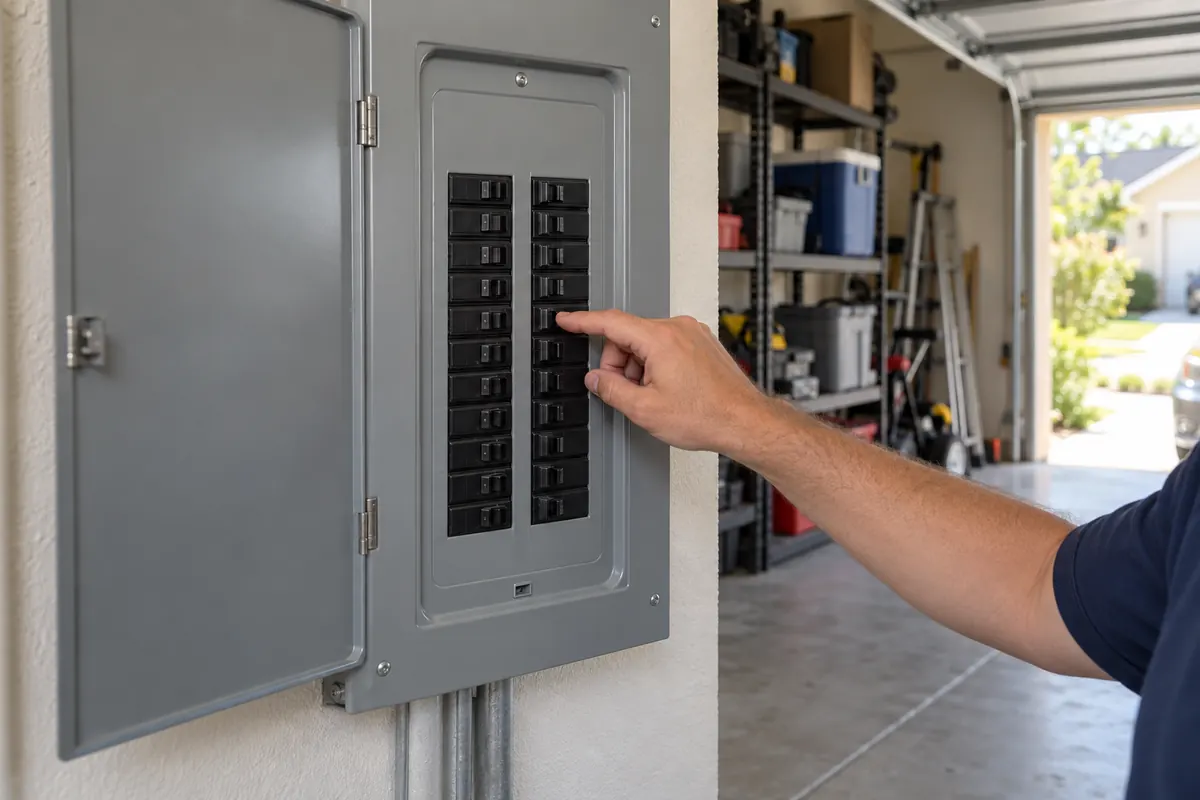
Electricity and standing water are the one combination on this page that can kill you. The rule is simple: you turn breakers off only when you are standing on a dry floor, your hands are dry, and the panel and the wall around it are dry. If any of those is false, do not touch it. Call your power company and ask them to cut the service at the meter, or call 911 if water is rising toward outlets.
When it is safe, open the panel door and switch off the breakers for the wet rooms. If you are not sure which ones, the main breaker at the top of the panel turns off everything. Leave the breakers off until the restoration company or an electrician has checked the outlets and the wiring in the wet walls. Wet drywall around a live outlet is a hazard for days, not minutes.
Do not unplug wet appliances or cords, and do not touch a wet switch to turn a light off. If a ceiling light fixture is dripping, the circuit above it is wet; that is a breaker-off situation, not a bucket situation.
After the water is off
- Photograph before you move anything. The source, the standing water, the water line on walls, contents in place. A slow video walking every room is enough.
- Call a restoration company, then the carrier. A certified company can be extracting water within hours, and drying logs start the day they arrive. Report the claim the same day either way. Find a certified company.
- Lift what you can. Rugs, boxes, electronics and papers off wet floors. Leave soaked carpet, pad and drywall for the crew; they are evidence and they are heavy.
- Keep every receipt. Plumber, meter key, fans, a night in a hotel. The water damage claim guide covers what the carrier will ask for.
Questions people ask
Where is the main water shutoff valve in a house?
Where the supply line enters: the basement or utility room on the street-facing side in cold climates; the garage, crawlspace or an exterior wall near the hose bib in warm climates. It is usually within a few feet of the water heater or pressure regulator and is the first valve on the pipe after it comes through the wall or floor.
Which way do you turn a water valve to shut it off?
Clockwise closes a round-wheel gate valve, usually several turns until it stops. A lever ball valve closes with a quarter turn so the lever sits across the pipe. At the curb, most utility stops close with a quarter turn clockwise so the tab is crosswise to the pipe.
What if the main valve is stuck?
Do not force a seized gate valve; the stem can snap and make the leak worse. Go to the meter box at the curb and close the utility's valve with a meter key or a wrench, or call the utility's emergency line and ask them to shut the service off.
Is it safe to turn off the breaker if the floor is wet?
No. Switch breakers off only when you are standing on a dry floor with dry hands and the panel and surrounding wall are dry. Otherwise call your power company to cut the service at the meter, or 911 if water is rising toward outlets.
Should I turn off the water heater after a burst pipe?
If the house's water is off, an electric heater can run its elements dry and a gas heater can overheat an emptying tank. Close the cold inlet valve on top of the tank and switch off the heater's breaker or set the gas control to OFF until the water is back on.
Should I shut off the water before I leave for a trip?
Many plumbers and insurers recommend it, and closing the two washing machine valves is the minimum. A burst supply hose or pipe while nobody is home runs for days, and an unattended loss is one the carrier will look at closely.